

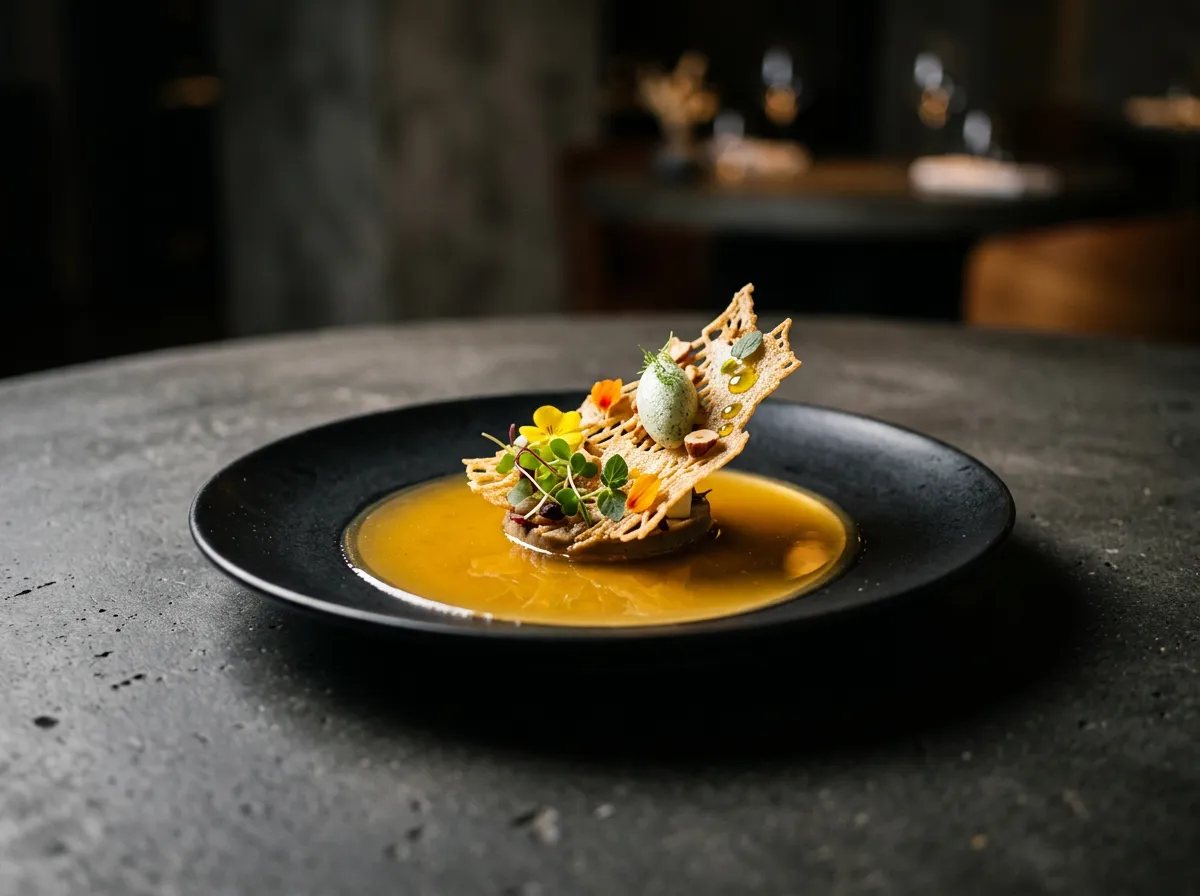

Photo source by SR Digital - Alinear Indonesia (FireFly – Gemini AI)
The modern gastronomic landscape is shifting its parameters for evaluating luxury dining. The focus of the culinary industry, once anchored entirely on the sourcing of rare, imported raw ingredients, is pivoting toward resource efficiency through the Upcycled Foods movement.
This movement emerged as a response to conventional food supply chains that discard high-quality raw materials due to minor visual defects or commercial aesthetic standards. Through scientific kitchen approaches and culinary creativity, these rescued ingredients are repositioned as high-value commodities in commercial kitchens, challenging conventional perceptions of what defines luxury food.

Photo source by SR Digital - Alinear Indonesia (FireFly – Gemini AI)
Advanced Culinary Techniques for Rescued Ingredients
Transforming food by-products into premium menu elements demands precise execution to harvest balanced textures and clean flavor profiles. The process of deconstruction is fundamental. Asymmetrical vegetable trimmings, for instance, are no longer treated as waste; instead, they are extracted using high-pressure techniques to retrieve nutrient-rich base stocks.
Through the meticulous process of clarification, this stock is refined into a crystal-clear consommé boasting a concentrated depth of umami. Concurrently, utilizing artisanal almond milk pulp or fruit skins involves vacuum dehydration to lock in delicate aromatic compounds before the material is pulverized into organic seasoning dusts. The output of these kitchen laboratory practices introduces a new layer of flavor complexity that conventional cooking methods seldom achieve.
Integrating Sustainable Restaurant Operational Systems
The successful processing of rescued food components into premium menu items is a tangible manifestation of implementing end-to-end operational systems in a [Circular Kitchen: Restoran Zero-Waste]. Within a circular kitchen ecosystem, ingredient inventory is monitored strictly to ensure no calorie is lost.
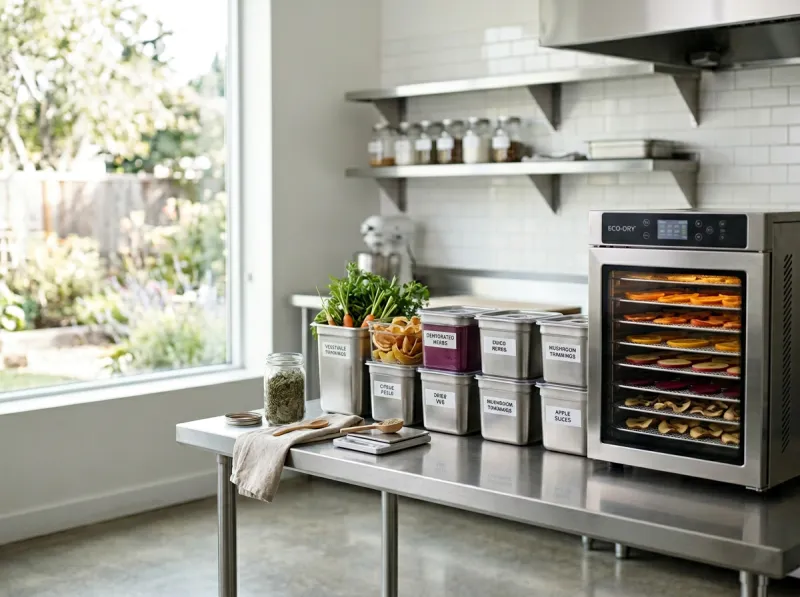
Photo source by SR Digital - Alinear Indonesia (FireFly – Gemini AI)
Adopting this concept restructures the workflow of traditional commercial kitchens. Each culinary station is systematically configured to classify and segregate organic by-products at the point of origin. This internal logistical precision ensures that rescued ingredients remain in peak freshness before entering secondary processing stages, establishing a closed-loop production cycle that lowers environmental strain while optimizing operational food costs.
"True luxury in a dish is no longer measured by the scarcity of its raw ingredients, but by the genius of the chef in giving ingredients a second chance to shine on the plate."
A New Value System in Haute Gastronomy
Upcycled foods redefine the responsibility of the modern chef. The approach proves that gastronomic quality is not dictated by the market price of an ingredient, but rather by the technical capability to maximize the intrinsic potential of every part of an organic resource.
"Mitigating food waste through high culinary technique represents the ultimate respect for our natural ecosystem and global food security."
Photo source by SR Digital - Alinear Indonesia (FireFly – Gemini AI)
WRAP-UP!
The Upcycled Foods movement within the culinary industry demonstrates that sustainability and complex sensory experiences can coexist seamlessly. Through disciplined modern kitchen techniques, materials that were previously overlooked are successfully transformed into innovative menu features that provide complex flavors while offering preventive solutions to global environmental challenges.
To experience and support this sustainable culinary shift, consider making a reservation at establishments practicing circular kitchen principles. When dining, intentionally select dishes that explicitly highlight upcycled components—such as sauces derived from fruit skin reduction or desserts utilizing nut pulp flour. Observe how the resulting textural complexity and flavor intensity offer a fresh perspective to your palate, and consider integrating these concepts of conscious consumption into your everyday lifestyle.
Looking to feature your brand and business through Alinear Indonesia’s Smart Publication & Smart Activation? Share your experience and consult with us today. Click here!



![Alinear Indonesia [Brand/Business Registration] Smart Publication & Smart Activation](https://www.alinear.sr-digital.biz/assets_web/images/qr-codes/3e23e7dab43d2e72854ba48a3a09cf75.jpg)