


Photo source by Alinear Indonesia Docs. (Adobe Firefly – Gemini AI)
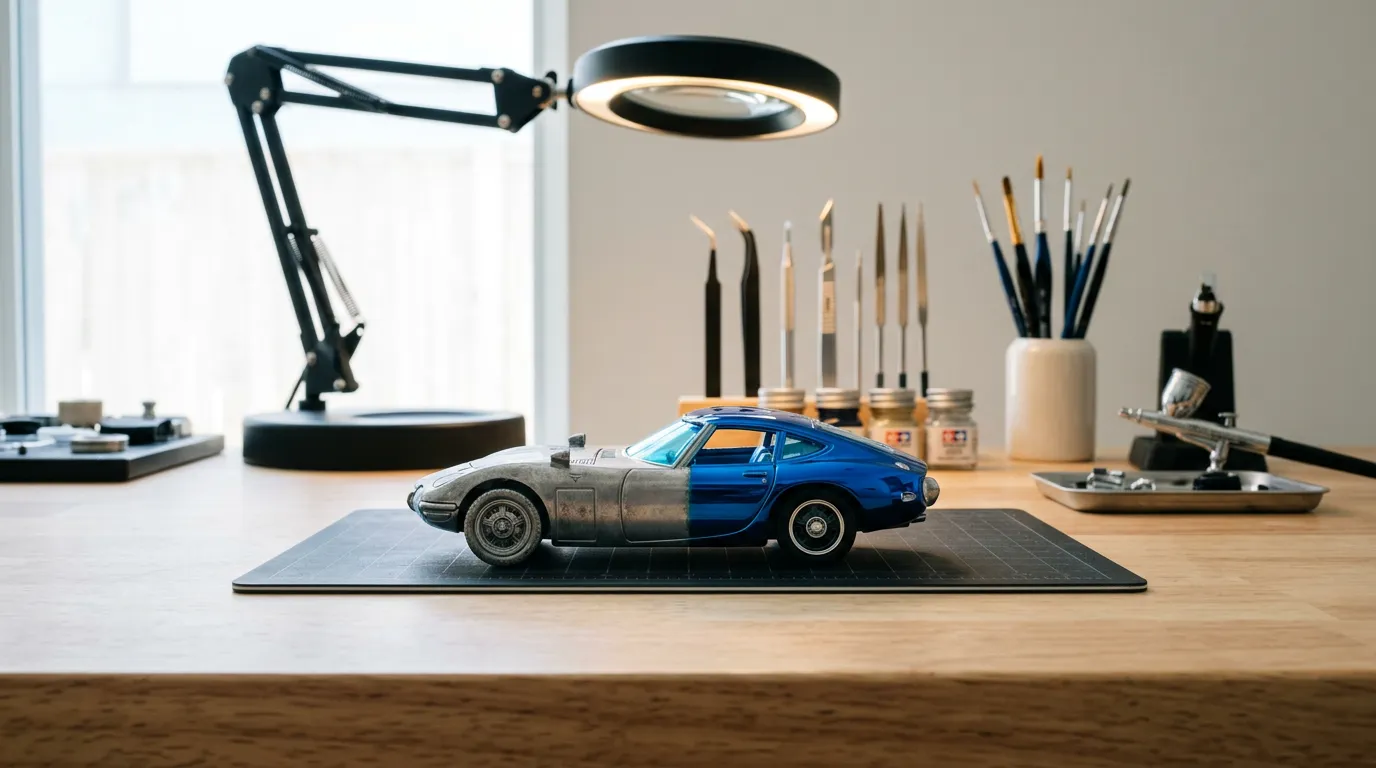
Within contemporary pop culture landscapes, the appreciation of historical artifacts frequently operates under the restrictions of passive preservation. Traditional collecting dogmas dictate that maximum financial and cultural value resides exclusively in pristine factory conditions—untouched objects locked inside sealed box configurations. However, this rigid framework leaves millions of late-20th-century diecast miniatures neglected, suffering from decades of friction, play wear, and environmental breakdown. These objects often end up discarded as visual waste in secondary flea markets.
This narrow perspective has triggered a sophisticated counter-movement. Modern collectors increasingly view oxidized scrap metal not as debris, but as a raw canvas awaiting advanced restoration. A clear aesthetic shift has occurred where individual craft execution is valued on par with untouched factory output. The focus of this subculture targets deep physical reclamation: The Vintage Diecast Restoration.
The technical core of vintage miniature restoration requires a deep understanding of the structural alloys used in legacy manufacturing—specifically zinc-aluminum combinations susceptible to decomposition (zinc pest) and superficial oxidation. Initial structural reclamation demands careful disassembly, drilling out factory chassis rivets with micro-scale drill bits to isolate the metal body, plastic interiors, and acrylic glazing elements without fracturing the surrounding housing.
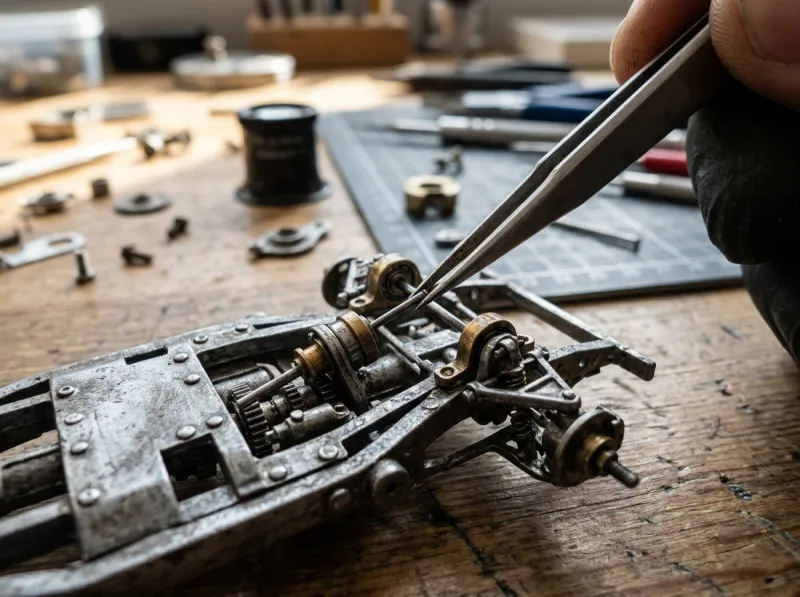
Photo source by Alinear Indonesia Docs. (Adobe Firefly – Gemini AI)
Once isolated, the oxidized metal body is submerged in chemical paint strippers to peel back degraded enamel layers while preserving fine historical casting lines. The secondary mechanical challenge involves rectifying bent steel axles warped by decades of uneven structural weight. Utilizing micro-locking pliers and calibrated pressure application, technicians true the axle back to a precise 0º coordinate system, ensuring flawless rolling kinematics without tracking deviations.
With structural baselines stabilized, the aesthetic phase proceeds via precision airbrushing techniques scaled for micro-surfaces. Unlike full-scale finishing, painting at this scale requires low pneumatic pressures and micro-nozzles measuring below 0.2 mm. This configuration prevents primer and base coats from flooding fine cast details, such as door seams, engine hood hinges, or raised branding emblems.
This highly technical discipline connects naturally with contemporary independent maker spaces. In these creative hubs, restored objects transcend their identity as used toys, reframed instead as standalone micro-sculptures. Restorers display their ability to recreate obsolete factory paint methods (spectraflame) or apply contemporary customization styles. This ecosystem bridges custom creators with collector demographics that value custom uniqueness over mass-produced uniformity.
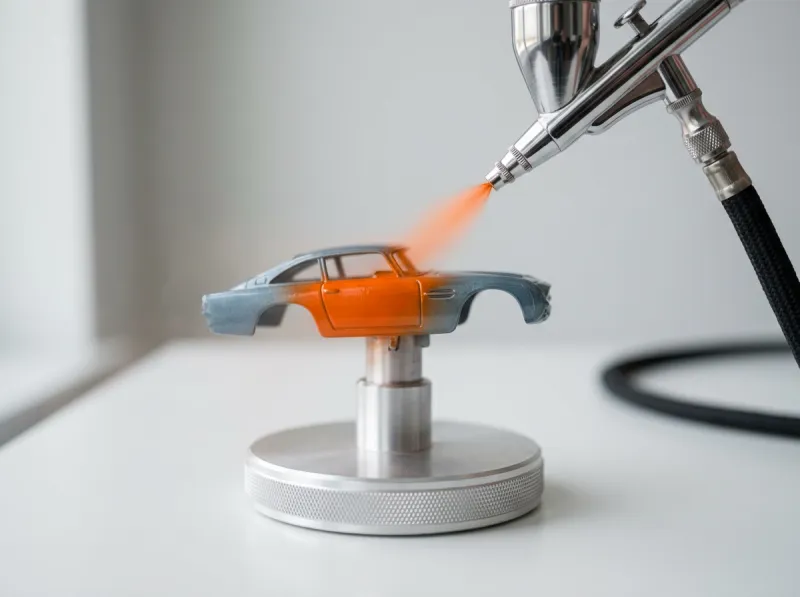
Photo source by Alinear Indonesia Docs. (Adobe Firefly – Gemini AI)
The dividing line between standard repaint jobs and advanced restoration is the commitment to chronologically accurate micro-detailing. Yellowed or brittle plastic interiors are chemically treated with hydrogen peroxide solutions under ultraviolet exposure to restore original polymer clarity. Scratched acrylic windshields are polished using progressive abrasive compounds until reaching absolute optical transparency.
"Vintage diecast restoration demonstrates that reclaiming the past does not require a time machine—merely the visual focus to see potential underneath decades of rust."
Advanced restorers often integrate micro-light-emitting diodes (micro-LEDs) within engine bays or dashboard housings. Wiring channels as thin as human hair are routed underneath the sasis matrix, connecting headlights and taillights to miniature coin-cell power supplies hidden in rear luggage compartments. This modification adds a dynamic visual dimension, transforming a static model into a compelling display piece with cinematic qualities.
As the collectible landscape evolves, the popularity of the diecast restoration subculture represents a meaningful move toward active historical conservation. This community demonstrates that preserving historical memory does not require relying on a shrinking pool of untouched vintage goods.
For local creative economies, this movement builds alternative revenue models centered on specialized expertise. Restorers, micro-painters, and component replicators form a sustainable, circular economic network. By restoring old metal with modern precision, this subculture ensures that historical pop culture narratives are preserved, continuing to engage new generations of collectors.
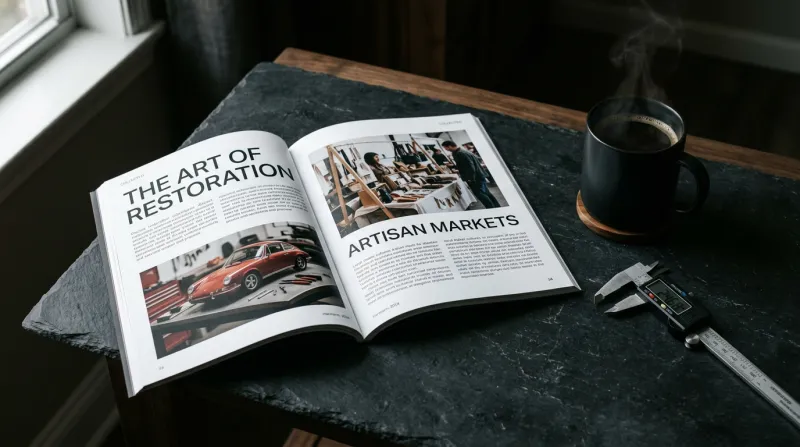
Photo source by Alinear Indonesia Docs. (Adobe Firefly – Gemini AI)
"In the hands of a precision micro-artisan, secondary scrap metal transitions from garage waste into a high-value aesthetic statement at the independent creative exchange."
WRAP-UP!
The subculture of The Vintage Diecast Restoration redefines the parameters of contemporary hobby collecting. By blending micro-mechanical alignment, high-resolution pneumatic application, and modern visual modifications that sync with the culture of, this movement transforms decaying toys into high-value display assets. The phenomenon proves that material age and wear can be effectively countered through skilled, adaptive craftsmanship, providing a sustainable future for pop culture artifacts.
Evaluate your archival property; examine your personal legacy storage or visit local independent maker markets to source viable restoration subjects, and experience the satisfaction of restoring historical miniature design through precision micro-craft.
Looking to feature your brand and business through Alinear Indonesia’s Smart Publication & Smart Activation? Share your experience and consult with us today. Click here!



![Alinear Indonesia [Brand/Business Registration] Smart Publication & Smart Activation](https://www.alinear.sr-digital.biz/assets_web/images/qr-codes/3e23e7dab43d2e72854ba48a3a09cf75.jpg)