

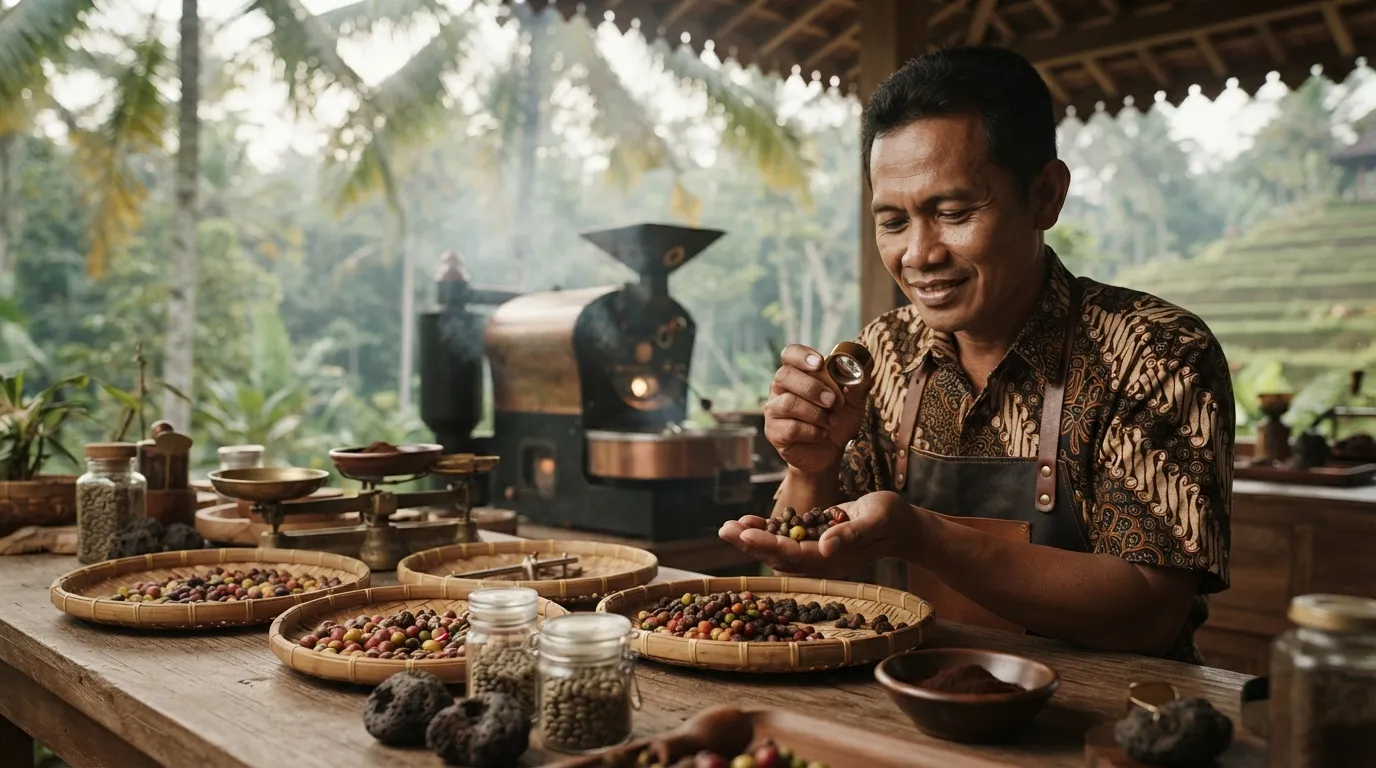

Photo source by Alinear Indonesia Docs (Gemini AI - Generated Image)
Bagi para penikmat kopi modern, secangkir minuman hitam di pagi hari bukan lagi sekadar asupan penolak kantuk, melainkan sebuah medium meditasi dan apresiasi sensorik. Gerakan mindful living telah mengubah cara kita memandang kopi: dari komoditas harian menjadi karya seni gastronomi yang sarat cerita.
Melalui review mendalam kali ini, kita akan membedah bagaimana sains terroir—interaksi antara tanah vulkanik, iklim mikro ketinggian, dan tangan dingin para artisan roaster—mampu menghadirkan pengalaman rasa yang jauh melampaui ekspektasi konvensional.
"Secangkir kopi terbaik tidak diciptakan di atas mesin espresso, melainkan direstui oleh tanah, ketinggian, dan kesabaran fermentasi."

Photo source by Alinear Indonesia Docs (Gemini AI - Generated Image)
Keunikan rasa kopi bermula jauh sebelum biji disangrai; ia lahir dari lanskap tempat pohonnya tumbuh:
1. Dampak Ketinggian Ekstrem ($>1400$ mdpl)
Review terhadap biji kopi dari dataran tinggi menunjukkan bahwa suhu malam yang dingin memperlambat pematangan ceri. Proses lambat ini memaksa biji mengumpulkan konsentrasi gula alami dan asam buah yang lebih kaya, menghasilkan flavor notes yang tajam dan bersih.
2. Karakter Mineral Tanah Vulkanik
Unsur hara tanah di wilayah perkebunan nusantara menyumbangkan kekhasan body dan aftertaste rempah yang elegan, menjadikan setiap daerah asal (origin) memiliki sidik jari rasa yang otentik.
"Di balik setiap tegukan specialty coffee tersimpan perjalanan panjang geografi dan sains yang memanjakan indra."
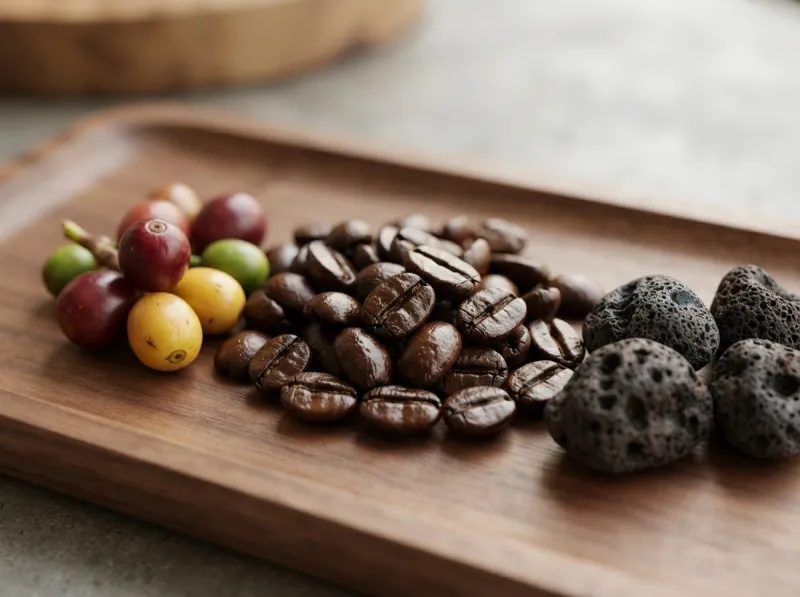
Photo source by Alinear Indonesia Docs (Gemini AI - Generated Image)
Inovasi terbesar dalam dekade terakhir terletak pada ruang pascapanen, di mana para produsen dan roaster mengontrol fermentasi ceri kopi secara ketat:
–– Metode Anaerobik Tertutup: Dengan menghilangkan oksigen dalam tangki fermentasi khusus, mikroorganisme tertentu bekerja memecah lendir buah (mucilage) secara perlahan. Hasilnya? Profil rasa yang eksplosif—mulai dari nuansa beri hitam yang ranum hingga aroma fermentasi anggur yang mewah.
–– Kontrol Suhu Ekstraksi: Review metode seduh menunjukkan bahwa penggunaan air bersuhu stabil (91°C–93°C) dengan rasio presisi mampu mengunci senyawa aromatik volatil tersebut tanpa menghadirkan rasa pahit yang berlebih.
"Kopi bukan lagi sekadar bahan bakar pagi, melainkan sebuah ruang meditasi rasa yang penuh kesadaran."
Menikmati kopi berbasis sains terroir menuntut kehadiran penuh (presence). Saat Anda mencium aroma bunga melati yang berpadu dengan keasaman jeruk sitrus pada tegukan pertama, proses sensorik ini bertindak sebagai jeda mental yang menenangkan di tengah hiruk-pikuk kehidupan perkotaan.

Photo source by Alinear Indonesia Docs (Gemini AI - Generated Image)
Eksperimen tiada henti di dunia specialty coffee membuktikan bahwa kopi adalah jembatan antara sains pertanian dan seni kuliner. Dengan memahami asal-usul dan proses di balik setiap biji, ritual minum kopi harian Anda bertransformasi menjadi bentuk apresiasi budaya yang paling elegan.
WRAP-UP!
Terroir dan fermentasi ceri menunjukkan bahwa kombinasi ketinggian geografis, teknik anaerobik, dan presisi seduhan mampu menghasilkan profil rasa kopi yang luar biasa kompleks, memperkaya ritual mindful living para penikmat urban. Kunjungi micro-roastery lokal terdekat minggu ini, pilih biji kopi dengan metode proses anaerobik tunggal, dan nikmati eksplorasi sensorik terbarunya di rumah.
––
Temukan bagaimana Smart Publication & Smart Activation dari Alinear Indonesia memadukan kecerdasan AI dengan kekuatan storytelling untuk melipatgandakan visibilitas bisnis Anda. Konsultasikan visi dan strategi pertumbuhan Anda bersama kami hari ini.
Siap membawa brand atau bisnis Anda memimpin di era AI? Klik di sini!



![Alinear Indonesia [Brand/Business Registration] Smart Publication & Smart Activation](https://www.alinear.sr-digital.biz/assets_web/images/qr-codes/3e23e7dab43d2e72854ba48a3a09cf75.jpg)