


Photo source by Alinear Indonesia Docs. (Gemini AI by Google)
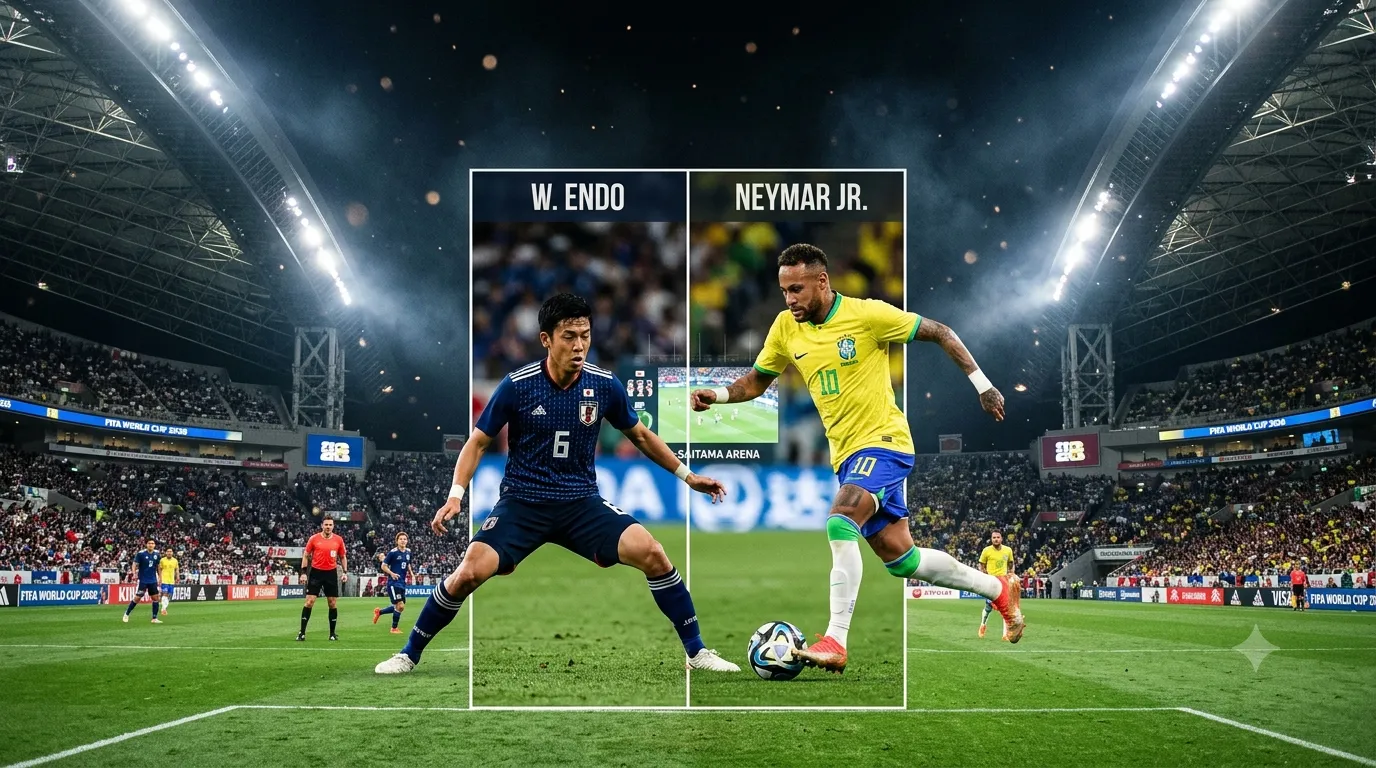
The knockout matrix of the World Cup 2026 has engineered a fascinating collision of diametrically opposed footballing philosophies in the Round of 16: Brazil versus Japan. This fixture has rapidly evolved past standard tournament scheduling, serving instead as the ultimate stress test for the modernization of Asian football. With adjacent regional squads falling early in the tournament, Japan enters the knockout phase bearing massive continental expectations on its shoulders.
For the Blue Samurai, successfully navigating a brutal group stage and systematically conquering the historical "second-game curse" that previously plagued their tournament cycles serves as definitive proof of squad maturity. Yet, standing directly in their path is Brazil—the five-star regime under permanent institutional mandate to secure silverware through aesthetic perfection (Jogo Bonito). Under the glare of global media, this match transforms into an ideological laboratory: can collective modern discipline dismantle the individual genius that has dominated the sport's global narrative for a century?
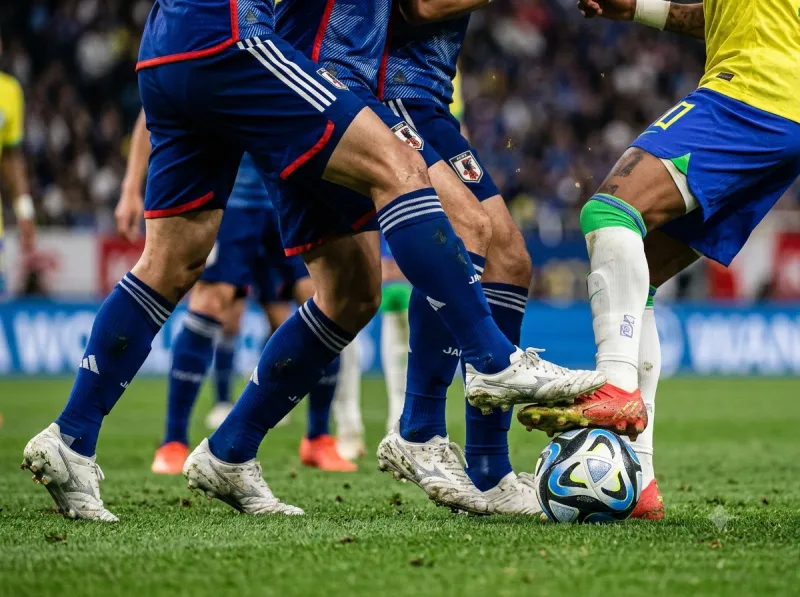
Photo source by Alinear Indonesia Docs. (Gemini AI by Google)
Tactical Architecture: Deconstructing Compact Low Blocks Versus Explosive Flank Penetration
Tactically, the friction between Brazil and Japan will be won or lost based on how each manager manipulates space within the final third. Brazil is projected to seize immediate spatial control from the opening whistle, deploying a fluid, highly offensive configuration designed to utilize explosive wingers to stretch the opponent’s horizontal defensive lines.
To paralyze this offensive arsenal, Japan is expected to break from conventional shapes, morphing into an asymmetric five-back system ($5-4-1$ or $3-4-2-1$) without possession. This calculation builds an intentional overload within the penalty box, maintaining hyper-compressed vertical and horizontal lines that eliminate the half-spaces Brazil’s creative midfielders require to slip through-balls to their forwards. The operational linchpin of Japan's defense rests on strict double-marking triggers along the flanks, isolating Brazil's inverted wingers before they can accelerate into the box.
Video source by FolaPlay (YouTube)
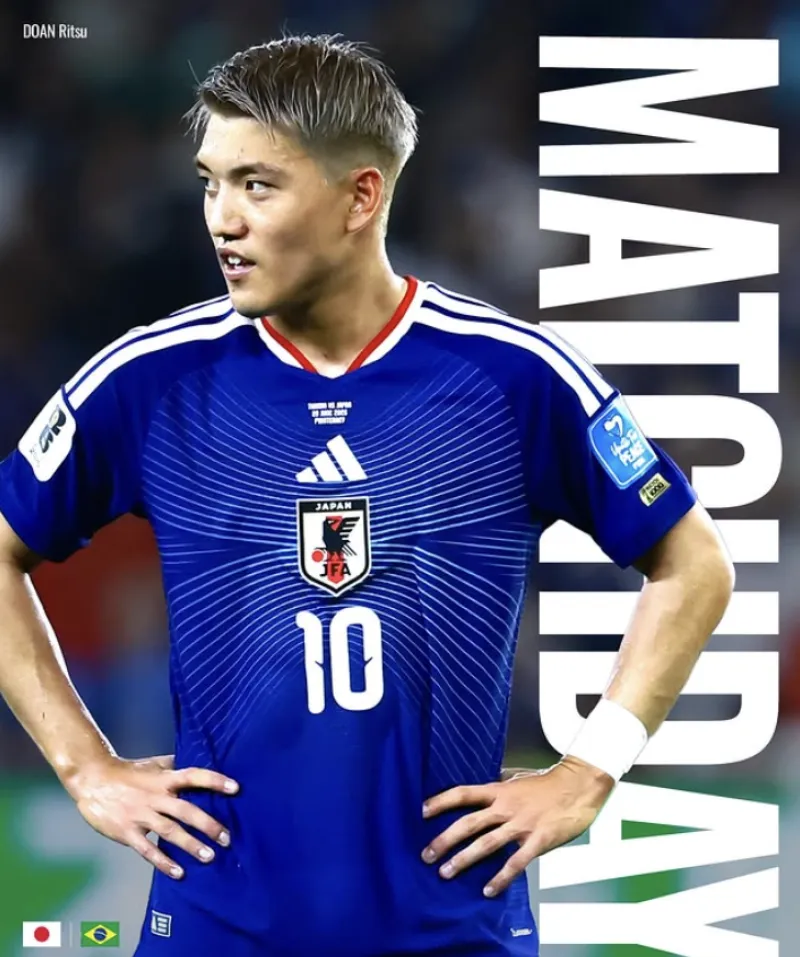
Photo source by JFA - Japan Football Association (Instagram)
Counter-Strike: Exploiting the Structural Deficit of Brazil’s High Line
While Brazil features a terrifying attacking frontline, their intense offensive commitments frequently expose a massive structural deficit in their defensive third. As Brazil’s overlapping fullbacks push high into advanced attacking positions, they activate a high defensive line that leaves enormous green spaces vacant along the outer corridors. This open space functions as the primary target inside Japan’s counter-attacking blueprint.
Japan will waste no kinetic energy on slow, decorative possession within their own half. The moment they disrupt Brazil's passing rhythm in the middle third via high-velocity interceptions, the ball will be driven vertically into the paths of their hyper-agile wing-backs. This instantaneous negative-to-positive transition is explicitly designed to isolate Brazil's central defenders, forcing them to turn and defend while running backward toward their own goal—a chaotic defensive position that maximizes fouls, structural disorganization, and penalty risks.

Photo source by BRAZIL FC - Brazil Football Club (Instagram)
Latest Squad Diagnostics and the Bench-Driven Game Changers
As the tournament moves into single-elimination parameters, squad depth and physiological recovery metrics become the ultimate variables capable of shifting match velocity in a split second. Latest data from both training camps indicates that the extreme physical toll of the group stage has introduced minor muscle fatigue among key starting entities. This reality forces both managers to display elite rotation management, preparing their bench-driven game changers for high-impact insertions.
For Japan, introducing fresh, high-pace wingers in the second half will serve as a lethal weapon precisely when Brazil’s backline begins to flag under environmental heat and constant tracking stress. Conversely, Brazil possesses an embarrassing wealth of attacking options, allowing their bench to seamlessly pivot their offensive strategy from wide isolation plays to direct, physical overloads down the center channel. The manager who reads game momentum correctly and executes substitutions with micro-second precision will secure a quarter-final passport, while the loser faces an early flight home.
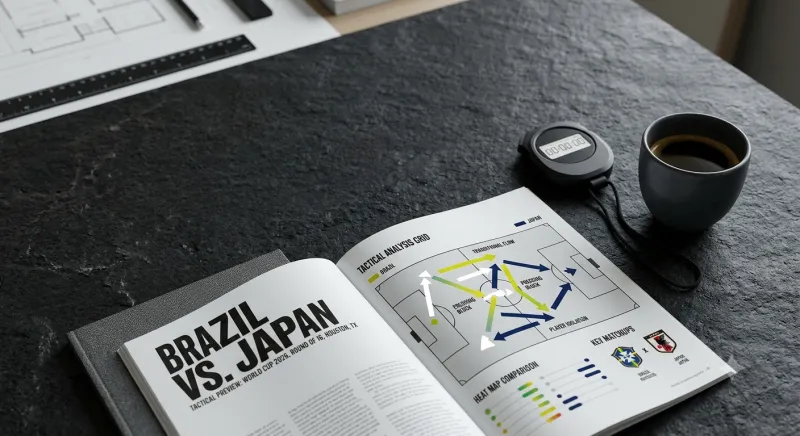
Photo source by Alinear Indonesia Docs. (Gemini AI by Google)
Video source by Kompas.com (YouTube)
"In the Round of 16 of the 2026 World Cup, historical five-star prestige guarantees zero luxury on the pitch; because when confronting the calculated discipline of the Blue Samurai, uncalibrated creativity quickly devolves into tactical frustration."
Weighing tactical calculations, squad diagnostics, and psychological tournament pressures, this fixture is projected to operate on razor-thin margins. If Japan can preserve defensive structure and avoid individual unforced errors during the opening 30 minutes, they maintain a highly viable mathematical path to secure a clinical $2-1$ victory via transition efficiency, or push the match into a penalty shootout.
Beyond the white chalk lines, this sporting collision triggers massive economic waves across the global sports entertainment ecosystem. Japan's presence deep in the knockout matrix dramatically scales up media rights valuations and corporate sponsorship ROI across the Asian market. It serves as a case study for modern sports business networks that elite football has outgrown its identity as a mere game; it operates as a multi-billion-dollar entertainment engine driven by strategic data, tactical sovereignty, and the unyielding focus of millions of global consumers watching historical new baselines being established in real time.
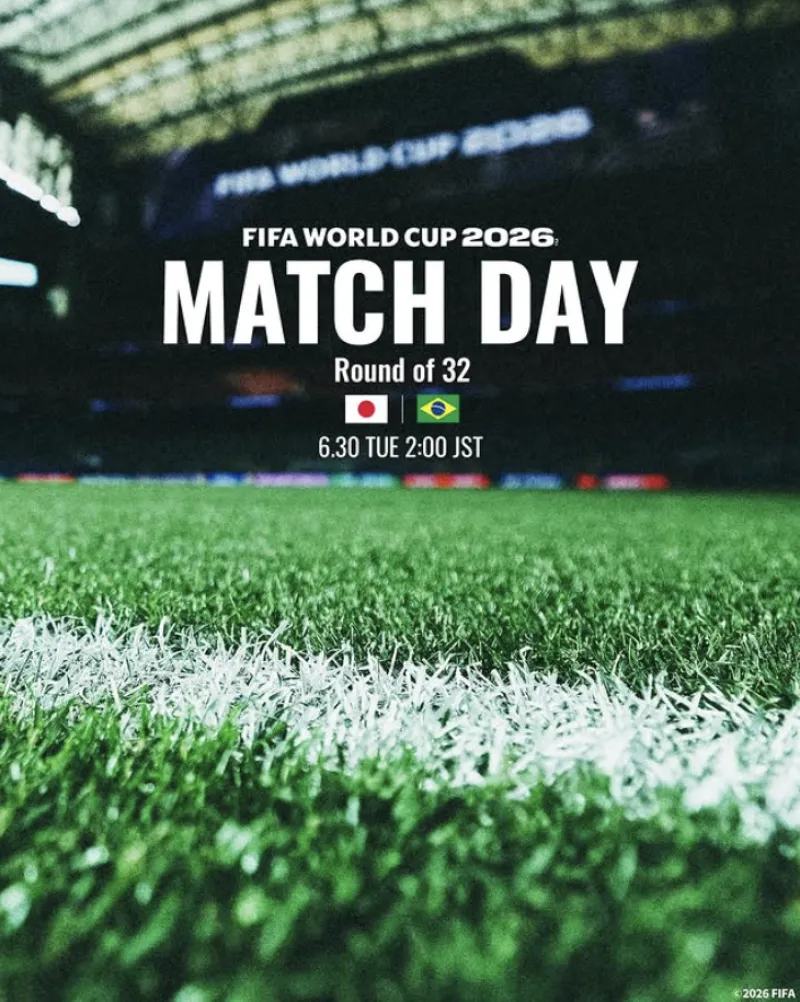
Photo source by JFA - Japan Football Association (Instagram)
"This match is not a debate over who commands the ball, but a demonstration of who ruthlessly exploits open territory the exact micro-second the opponent loses concentration."
WRAP-UP!
The Round of 16 showdown between Brazil and Japan at the World Cup 2026 represents the absolute evolutionary peak of contemporary football tactics. It confirms that the era of uncontested individual dominance has been matched by mathematically precise, collective team strategy. Japan's ability to transcend historical baggage and stand tall as Asia's final defensive shield demonstrates that through the implementation of micro-tactical frameworks, the traditional chasm between legacy empires and emerging global forces can be entirely closed.
Optimize your screening environment for this vital knockout match; closely trace the off-ball tracking of Japan’s defensive midfield during the opening 15 minutes to analyze exactly how they construct zonal traps to freeze the Seleção’s creative core.
Looking to feature your brand and business through Alinear Indonesia’s Smart Publication & Smart Activation? Share your experience and consult with us today. Click here!



![Alinear Indonesia [Brand/Business Registration] Smart Publication & Smart Activation](https://www.alinear.sr-digital.biz/assets_web/images/qr-codes/3e23e7dab43d2e72854ba48a3a09cf75.jpg)