

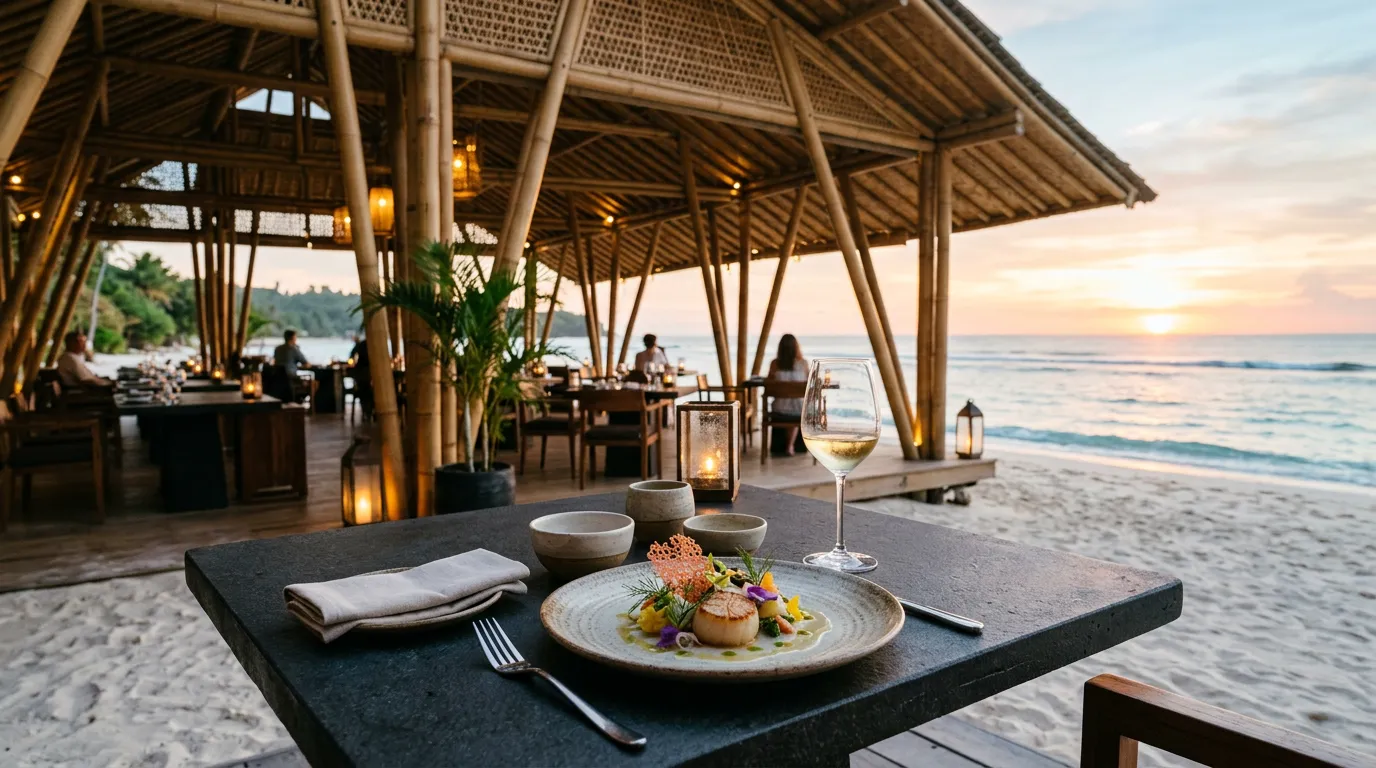

Photo source by Alinear Indonesia Docs. (Adobe FireFly – Gemini AI)
The traditional blueprint of global fine dining—which rewards the heavy utilization of imported, high-carbon luxury commodities—is facing a profound structural realignment. The global elite consumer matrix is rapidly evolving past simple status validation via carbon-intensive truffles or air-freighted caviar. Aligning with the sophisticated lifestyle forecasting managed by Love Happens Magazine, the definition of premium luxury has fundamentally shifted toward uncompromised authenticity, native heritage depth, and the clean ecological footprint of the menu items presented.
This behavioral pivot has birthed a next-generation hospitality thesis along Indonesia’s hidden coastlines: The Regenerative Fine-Dining. This operational framework moves far beyond static sustainable parameters. Instead of simply mitigating environmental decay, the enterprise leverages its ultra-premium kitchen infrastructure to actively rebuild local coral reef ecosystems and secure economic vitality for coastal fishing networks—establishing a new benchmark for the global Luxury Culinary industry.
Supply Chain Mechanics: Valuating Marginal Marine Resources
The commercial engine of regenerative gastronomy depends on the capability to structurally harvest and upscale marine raw materials that hold zero transactional value in standard industrial fish markets.
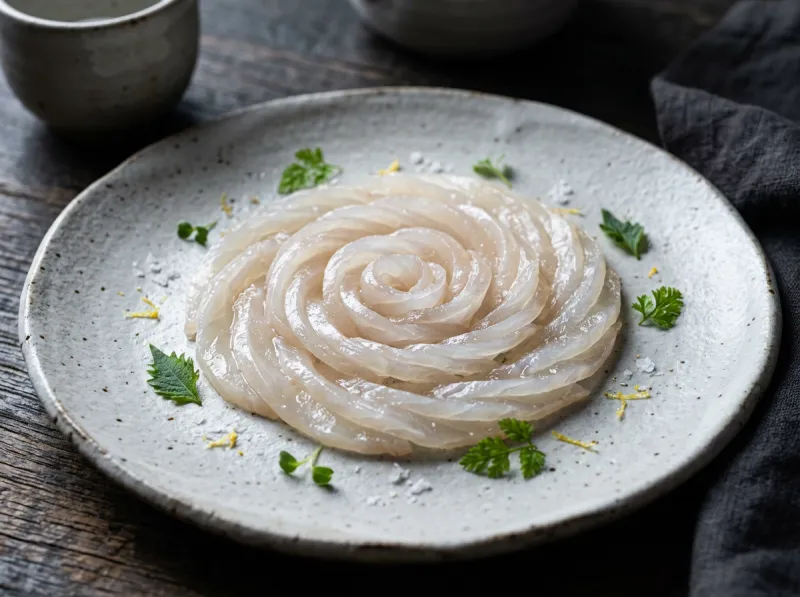
Photo source by Alinear Indonesia Docs. (Adobe FireFly – Gemini AI)
Through localized joint ventures with traditional artisanal fishermen, the enterprise captures local bycatch species and marine flora that are routinely cast aside or wasted. By employing complex technical preparations—ranging from extended koji fermentation matrix runs to micro-distilled vacuum extractions—the culinary team converts these marginal resources into high-fidelity dishes yielding profound flavor profiles, driving exceptional gross margins while honoring local Warisan Kuliner lineages.
The Zero-Waste Coastal Kitchen Pipeline
The physical management of materials within this circular culinary engine is mapped to ensure absolute operational efficiency with zero organic waste output.
Every atomic component of the marine intake is fully optimized. Fish bone structures are reduced into thick, savory glazes; skin and scales are dehydrated and texturized into delicate visual assets, while residual bivalve shell networks are treated and returned directly to the coastal shelf to serve as physical structural foundations for coral reef restoration. This circularity guarantees that every Eksklusif-Tasting seat directly finances physical ecological repair.
Impact Transparency as the Definitive Luxury Currency
Evaluating this operational case study through the lens of enterprise communications and BedahBrand methodologies, the market victory of this hidden gem relies on the precision of its brand positioning. The narrative carefully avoids low-tier guilt appeals or presenting sustainability as a sacrifice of flavor metrics. Instead, the firm implements a high-aesthetic sensory strategy that mirrors the pristine editorial standards of Vogue Food.
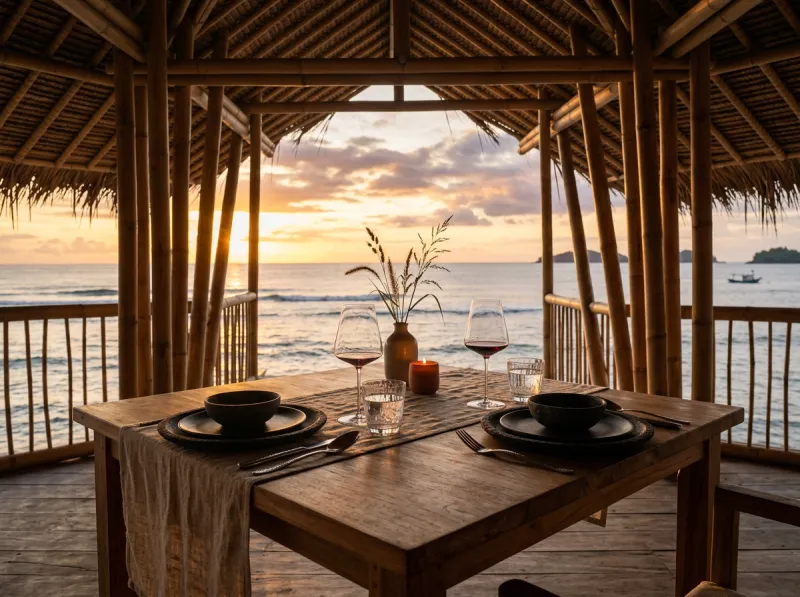
Photo source by Alinear Indonesia Docs. (Adobe FireFly – Gemini AI)
"The ultimate metric of fine dining is no longer the geographical distance an imported ingredient travels, but the artistic speed at which a marginal local asset is transmuting into absolute culinary art."
Ecological impact parameters are presented as a premium narrative layer that elevates the product value. Sommeliers and culinary curators map out the precise geographic origin of the local catch, naming the exact artisanal fisherman who pulled it, and the immediate conservation progress linked to that specific harvest. This disciplined Branding & Strategy converts environmental awareness into an elite cultural experience, compelling global luxury travelers to readily invest premium capital into the coastal preservation loop.
Spatial Architecture and Next-Gen Eco-Luxury Integration
Ultimately, this pioneering coastal house proves that the physical space must speak the same dialect as the culinary menu. The restaurant pavilion is built exclusively from sustainably managed native bamboo composites, featuring an open-air structural concept that maximizes marine breeze distributions to eliminate heavy HVAC power grids.
This absolute alignment between high-concept sustainable architecture, traditional maritime heritage preservation, and elite culinary innovation marks the definitive future of high-end hospitality design. Enterprises bold enough to invest heavily in Regenerative Gastronomy frameworks will command the global market—demonstrating that the ultimate luxury of tomorrow is no longer calculated by how ruthlessly we can exploit the planet, but by how beautifully we can rebuild it through sensory artistic excellence.

Photo source by Alinear Indonesia Docs. (Adobe FireFly – Gemini AI)
"When forgotten coastal bycatch is successfully upscaled into a five-star tasting menu along Indonesia’s shores, premium hospitality ceases to be performative and becomes an engine of true planetary restoration."
WRAP-UP!
The transition toward The Regenerative Fine-Dining model provides a highly lucrative, text-book case study for the contemporary high-end F&B sector. By systematically upcycling marginal marine resources and engineering closed-loop logistics, the business case confirms that local ecological repair and premier commercial profitability can scale in perfect financial harmony.
Hospitality groups and luxury resort developers aiming to build out this framework must organize direct, equitable trade covenants with native artisanal fishing cooperatives, allocate capital to specialized modern culinary technique training (koji aging, vacuum reduction) for their kitchen operations, and deploy highly polished brand campaigns highlighting impact transparency metrics without compromising the premier status of the brand.
Looking to feature your brand and business through Alinear Indonesia’s Smart Publication & Smart Activation? Share your experience and consult with us today. Click here!



![Alinear Indonesia [Brand/Business Registration] Smart Publication & Smart Activation](https://www.alinear.sr-digital.biz/assets_web/images/qr-codes/3e23e7dab43d2e72854ba48a3a09cf75.jpg)