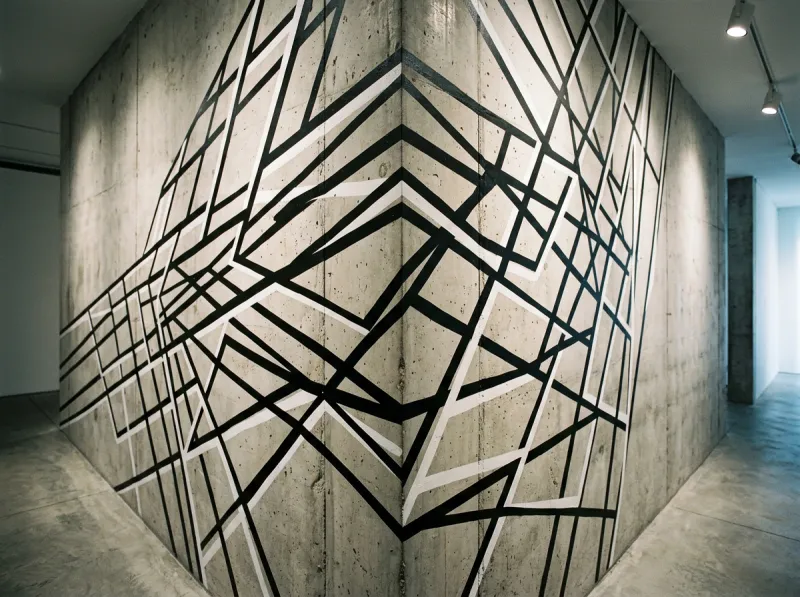
This structural design process demands precise trigonometry calculations. The artist must establish a single coordinate point in the exhibition space as the master Vantage Point. This master monocular anchor is where every image distortion is calibrated. When applied to two perpendicular walls meeting at a corner, the image is stretched horizontally on the X and Y axes to extreme degrees. Through calibrated mathematical elevation, an image that appears abstract or fragmented from any other angle instantaneously assembles into a unified, solid three-dimensional volume when viewed strictly from that anchor point.
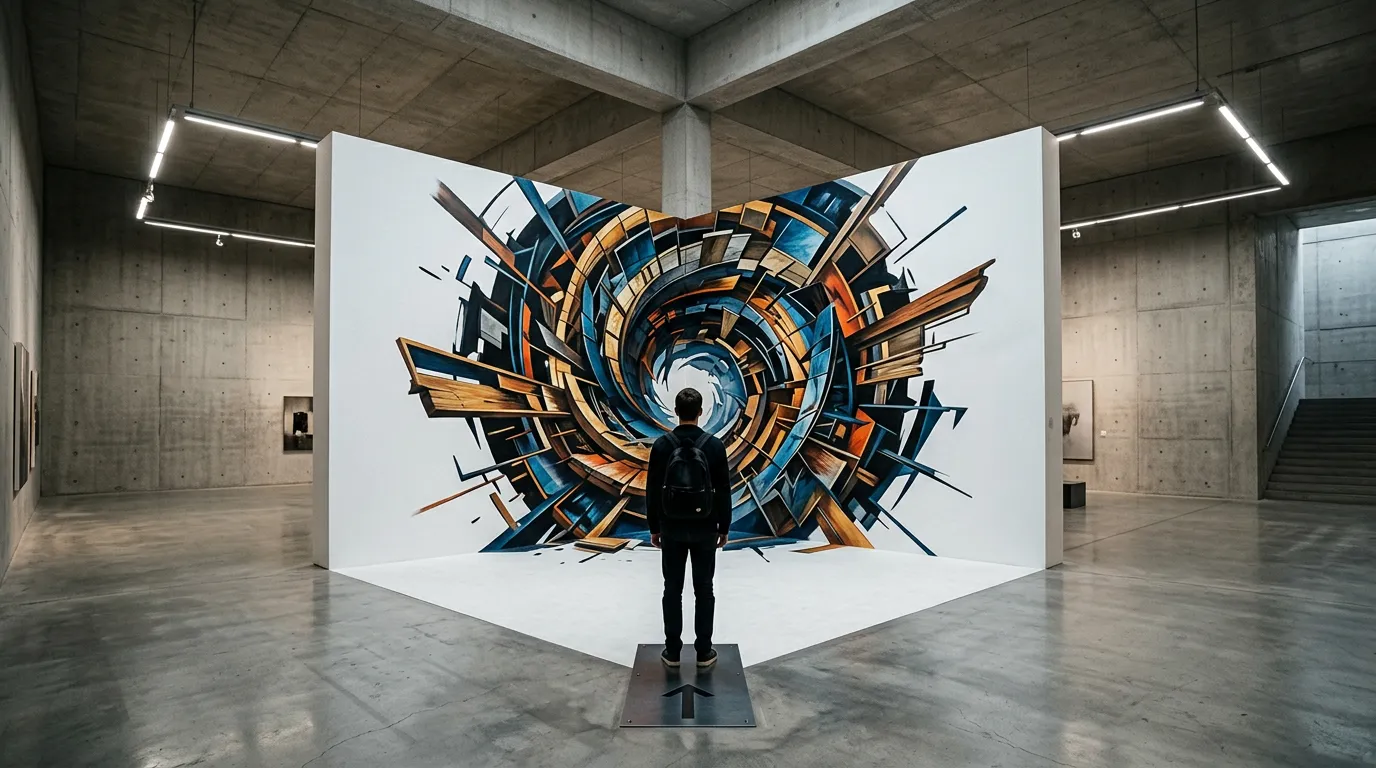
The success of an anamorphic art installation is not determined by what is visible on the walls, but by the kinetic movement of the human viewer within the gallery space. Unlike classical exhibitions where viewers are expected to remain stationary at a safe distance, these installations require the audience to actively navigate the physical environment to solve the visual puzzle.
This unique dynamic converts the viewer from a passive observer into an integral element of the art performance itself. Visitors must shift, duck, or move forward and backward to discover the focal lock-on. When their eye secures the vantage point coordinate, a moment of optical transition occurs: what initially appeared as senseless, stretched imagery instantaneously shifts into a solid three-dimensional object that seems to burst into the physical room or push inward into deep space behind the wall. This interaction offers profound cognitive satisfaction, anchoring the visual experience in deep sensory memory.
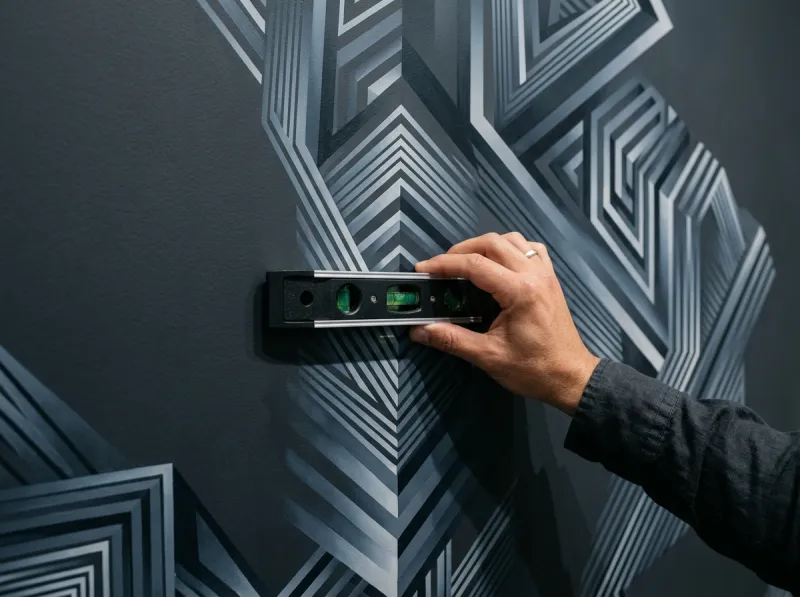
Photo source by Alinear Indonesia Docs. (Adode Firefly – Gemini AI)
Technically, achieving a flawless anamorphic illusion requires strict control over the gallery’s physical variables. Primary environmental challenges include eliminating visual noise that can break the depth illusion, such as falling shadows from architectural elements or excessive surface glare from standard paint finishes.
"Anamorphic 3D visual art proves that static architectural limits can be managed via forced perspective mathematics, converting rigid concrete corners into portals of deep spatial simulation."
To manage this, designers utilize surfacing materials with ultra-low reflectivity (matte finish), such as deep acrylic pigments or specialized felt coatings. Lighting design is restricted to diffused ambient arrays to secure even illumination across perpendicular surfaces without creating sharp boundary shadows at the wall corners. When the architectural structure is successfully visually neutralized, the border between physical reality and simulated depth dissolves, reinforcing the dramatic pop-out effect.
Projecting the evolution of exhibitions and visual entertainment forward, the adoption of large-scale anamorphic 3D engineering will likely extend past gallery environments into public architecture and commercial design. Visual arts are transitioning from isolated quiet display halls into urban core transit corridors, major facade architecture, and curated lifestyle spaces to engage with city mobility patterns.
For the contemporary art ecosystem, this shift centers competition on the creation of holistic, multi-layered visual experiences rather than static objects. Artists are challenged to master not only color and composition but also architecture, perceptual psychology, and structural engineering. Under the convergence of mathematical calculation and artistic freedom, the future of visual exhibition design involves breaking the canvas boundary completely to define entire physical environments as dynamic optical experiences.
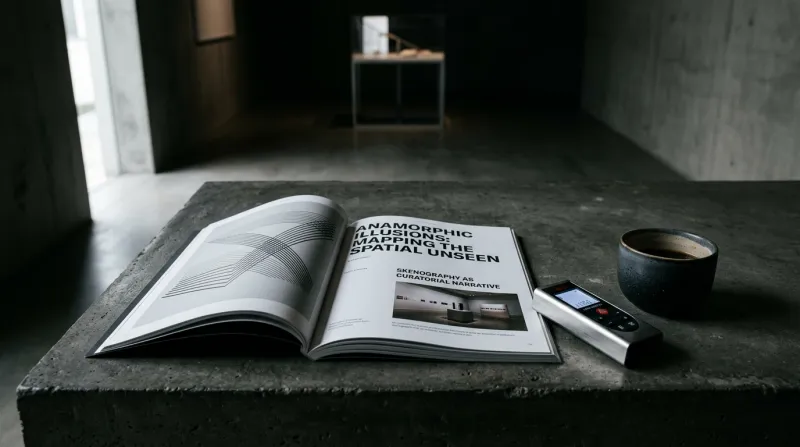
Photo source by Alinear Indonesia Docs. (Adode Firefly – Gemini AI)
"Within an anamorphic exhibition, you do not simply look at a canvas; you are required to physically move through space to complete the optical circuit and unlock the visual simulation."
WRAP-UP!
The resurgence of The Anamorphic 3D Art Installation defines a progressive chapter for immersive entertainment and visual exhibition science. By blending precise forced perspective mathematics with adaptive architectural management, this trend creates solid three-dimensional depth simulations that break the canvas boundary entirely without reliance on complex digital hardware. This physical space engineering methodology offers high-retention visual experiences that demand active viewer participation, establishing a new operational index for contemporary exhibition design that balances artistic intent with structural engineering.
Audit contemporary experimental art programming; search for local exhibition venues adopting architectural space manipulation techniques, secure the vantage point, and experience how visual arts can redefine physical space engineering.
Looking to feature your brand and business through Alinear Indonesia’s Smart Publication & Smart Activation? Share your experience and consult with us today. Click here!






![Alinear Indonesia [Brand/Business Registration] Smart Publication & Smart Activation](https://www.alinear.sr-digital.biz/assets_web/images/qr-codes/3e23e7dab43d2e72854ba48a3a09cf75.jpg)