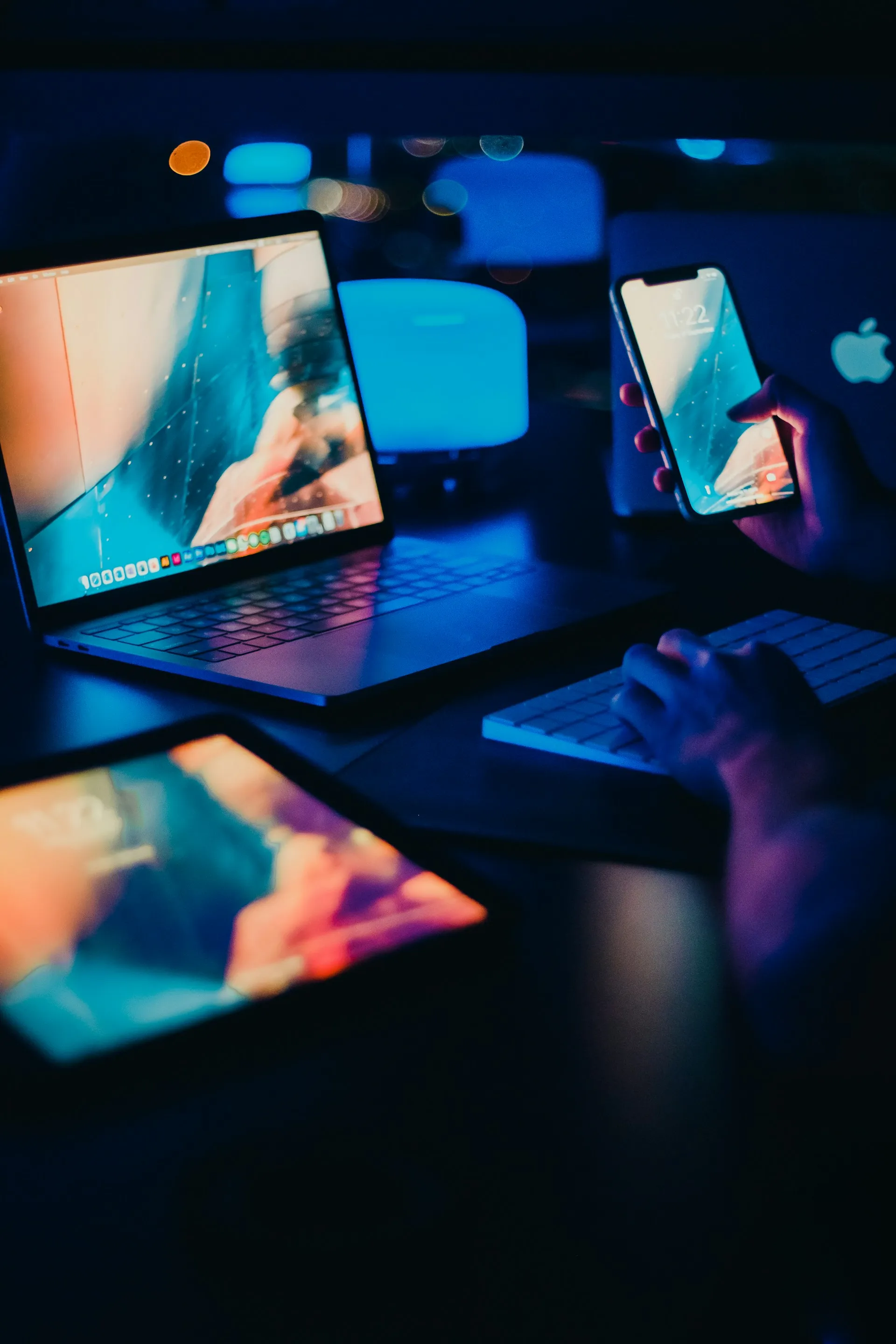

Photo by Vitaly Gariev on Unsplash
For the past few decades, our relationship with the digital world has always been confined by physical frames—whether it be the small screen on a phone, a computer monitor on a desk, or a television in the living room. However, we are now on the brink of a major shift that will erase these physical boundaries forever: the birth of the era of Spatial Computing. This is a technology that allows digital content to no longer merely exist "inside" a device, but to live, breathe, and interact within the physical space where we actually reside. Furthermore, it represents the greatest leap in technological history, where physical space transforms into a vast computing environment. Data and reality merge into a new harmony that changes how we process information forever.
"The most advanced technology is the technology that disappears into our lives, making the real world more meaningful without separating us from it."
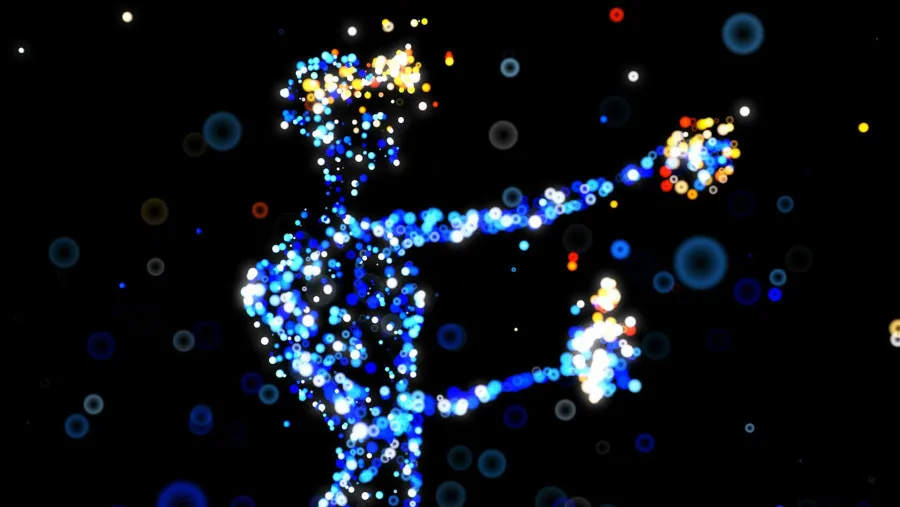
Photo by julien Tromeur on Unsplash
The core concept of spatial computing is the use of highly sophisticated Mixed Reality, which maintains our full awareness of the surrounding environment while overlaying digital elements upon it. With navigation using only natural eye movements, voice commands, and simple hand gestures, a user can open dozens of application windows in mid-air, watch content on a cinema-scale screen wherever they are, and engage in three-dimensional work collaborations that feel physically real. For creative and professional industries, this is a paradigm revolution; a designer or engineer can now visualize digital models in their actual size in the middle of a room, observing every detail from various angles and making direct modifications without needing to touch a traditional mouse or keyboard.

The impact of spatial computing on productivity and digital lifestyles will be profound and wide-ranging. We no longer have to be tied to a static desk or a stiff posture facing a screen; our workspace is now dynamic and follows us wherever we go. In the world of education, spatial computing offers a transformative learning experience, where students can dissect atomic structures or explore global historical sites through highly detailed and interactive spatial visualizations. In entertainment, storytelling no longer just happens in front of us as passive viewers, but occurs all around us as active participants, providing a level of immersion unprecedented in media history. This is what we call the era of democratizing immersive experiences that will redefine media consumption standards globally.

Photo by Sophia Stark on Unsplash
However, the transition to this spatial world also brings new challenges, particularly regarding privacy and data ethics. With devices equipped with various sensors and cameras to precisely map private spaces, the protection of spatial data becomes a crucial issue for developers to resolve. Additionally, there is a challenge in designing interfaces that keep humans connected to the social reality around them, rather than becoming increasingly isolated within their own virtual worlds. Innovation in the field of Future Tech must always be guided by the principle that technology exists to strengthen human capabilities, not to replace valuable human interaction. The balance between digital convenience and physical presence remains the key to ensuring this technology is accepted as a positive part of civilizational evolution.

Photo by Sara Kurig on Unsplash
Spatial computing serves as a gateway to a future where technology becomes far more intuitive and aligned with the way the human brain works. We are moving toward a world where digital devices no longer dominate our attention in a disruptive way, but instead allow us to remain upright, fully present, and interactive with the world while maintaining instant access to the information we need. Spatial computing is the canvas of the future, ready to be filled with creative ideas that will redefine how we work, play, and communicate with one another. This is the beginning of the end of flat-screen dominance, moving toward an era where the world itself is our primary interface.

Photo by and machines on Unsplash
"In spatial computing, imagination is no longer something we only see from a distance, but a new space we can truly inhabit."
WRAP-UP!
Spatial computing is an interface revolution that will transform every corner of our physical space into a boundless hub of information, creativity, and interaction. Start familiarizing yourself with gesture and voice-based interaction concepts in preparation for the new standards of future technology use. Share your experience!
![Alinear Indonesia [Brand/Business Registration] Smart Publication & Smart Activation](https://www.alinear.sr-digital.biz/assets_web/images/qr-codes/3e23e7dab43d2e72854ba48a3a09cf75.jpg)