

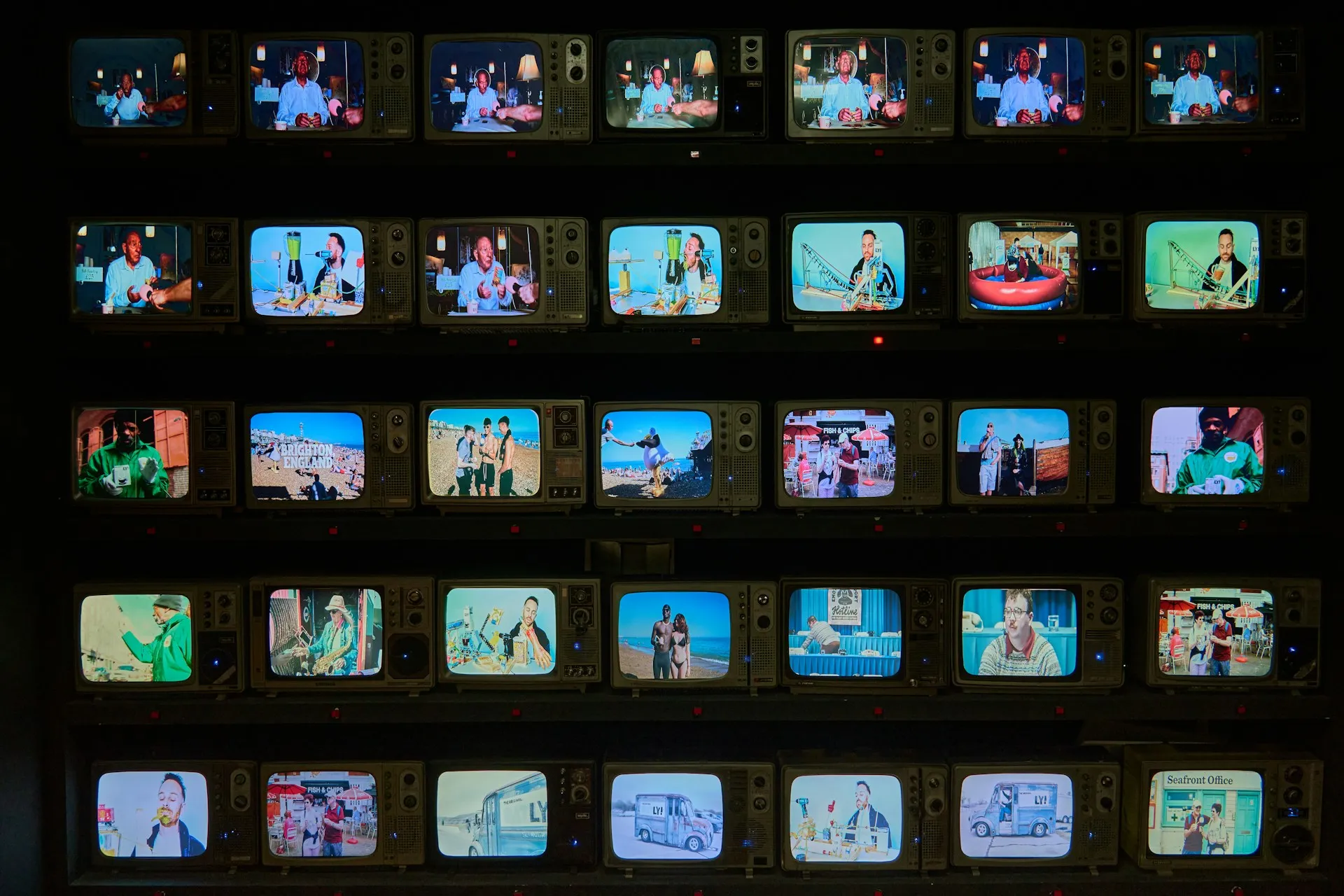

Photo by Zeg Young on Unsplash
What did the dynamic flow of public spaces or a quiet afternoon in a town square look like several decades ago? The answer is now unfolding with astonishing visual clarity, thanks to a close collaboration between historical archivists and digital artists. By utilizing advanced Artificial Intelligence (AI) technology, black-and-white celluloid footage—originally blurry, shaky, and physically damaged by the passage of time—is being successfully restored into vibrant, high-definition, and deeply colored videos.
This development marks a new era in the entertainment and cultural preservation industries. This transformation proves that modern technology serves a dual purpose: it is not only an engine for designing the future, but also an effective tool for rescuing precious fragments of the past, converting fading historical documents into highly relevant visual assets for contemporary audiences.
Data-Driven Colorization: Neural Networks as Interpreters of Chromatic Accuracy
The process of applying color to archival films (AI Colorization) is no longer a matter of subjective guessing or random estimations by visual designers. Deep learning algorithms operate by analyzing millions of historical references, which include secondary archival photographs, textile documents from the specific era, and written records concerning the architectural materials used at the time.
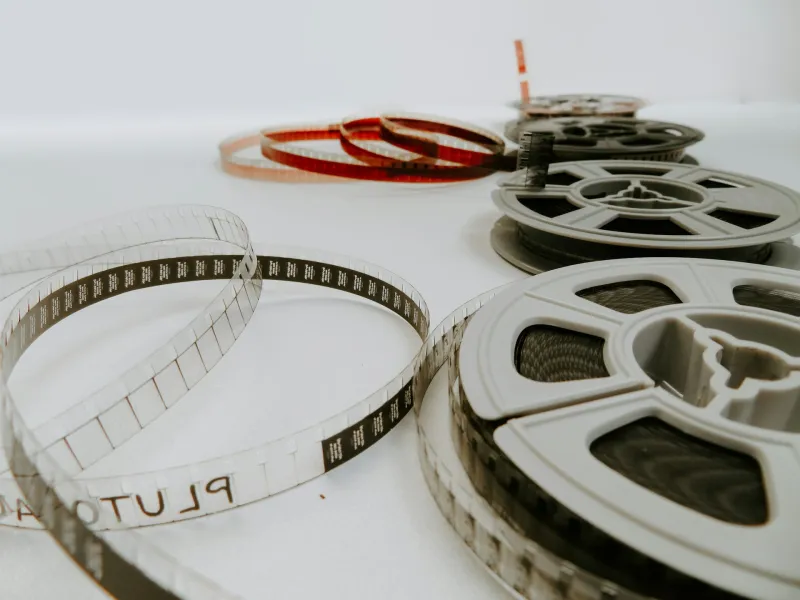
Photo by Denise Jans on Unsplash
Through this massive baseline dataset, AI can apply colors with high historical accuracy to public transit vehicles, period-accurate clothing, and old colonial building facades. The final result is a highly realistic chromatic reconstruction that closely matches the actual conditions present when light first hit the mechanical camera shutter decades ago.
Computational Motion Smoothness: Reconstructing Resolution and Frame Rates
The greatest obstacle with classical celluloid film is its choppy, jerky motion, which often features distracting visual artifacts due to being recorded at low speeds, typically around 16 frames per second (fps). This is where motion interpolation technology takes center stage, intelligently inserting brand-new frames between the original ones.
Through this computational process, the video speed is smoothly increased to 60 fps, producing natural movement tailored to the human eye. Simultaneously, AI sharpens the image resolution up to a crisp 4K standard, eliminates annoying visual noise, and stabilizes camera shakes while carefully preserving the underlying film grain that constitutes the artistic soul of celluloid cinema.
A New Emotional Connection: Linking Collective Memory Across Generations
Once processed through digital restoration channels, these vintage films rapidly transform into compelling educative entertainment content across social media platforms. Their presence triggers widespread audience engagement because they display historical realities in a visual format that aligns seamlessly with modern technology standards.
Photo by Alan Chen on Unsplash
Watching ancestors navigate public spaces with smooth, natural movements and clear facial expressions creates a sturdy emotional bridge for younger generations. This phenomenon helps them build a sense of cultural ownership, understand the evolution of city landscapes more intimately, and foster a deeper appreciation for their own historical roots.
"Artificial intelligence is not meant to dictate how the past looked, but to clear away the dust of time so we can view history through a much clearer lens."
The Primary Parameters for Assessing the Quality of AI-Driven Video Restoration
To evaluate the success of a historical video restoration project powered by artificial intelligence, three technical benchmarks serve as standard guidelines:
–– Preservation of Original Film Grain
High-quality AI restoration does not wipe away the natural texture of a film merely to make the image look unnaturally smooth. Keeping a careful balance between clearing out physical debris and retaining the underlying film grain is essential to ensure the footage does not lose its organic celluloid character.
–– Temporal Consistency Across Frames
A successful colorization process is characterized by a complete absence of color flickering when the video plays. The colors on moving objects must remain stable from one frame to the next, proving that the algorithm is tracking moving elements with absolute precision.
–– Historical Context Accuracy of the Final Output
The colors and architectural details brought to light by the AI must be validated through official historical records. The success of a restoration project is measured not just by its visual beauty, but by how faithfully the computational system adheres to the material realities of the era in which the video was originally captured.
"Within every pixel of classical video brought back to life, a meeting ground is formed where the wonder of the present generation meets the footsteps of those who came before."
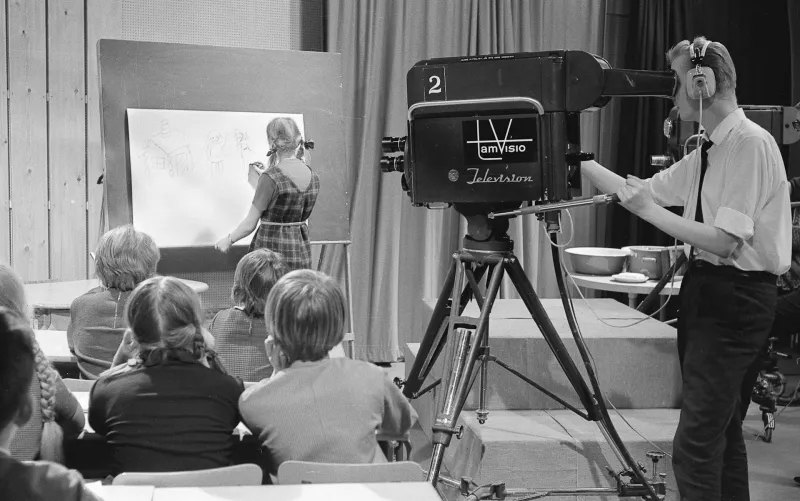
Photo by Yle Archives on Unsplash
WRAP-UP!
AI-driven video restoration projects prove that computing power can act as a highly effective protector of cultural heritage. By combining accurate deep learning algorithms with digital preservation expertise, the entertainment industry can present historical content not as static documents, but as living pieces of art that restore collective memory and strengthen a society's cultural identity [Business Activation].
Support this digital preservation movement by engaging with and sharing official archival restoration content published by trusted cultural institutions. If you hold physical film reels or vintage family media, consider starting an initial digitization process to protect these valuable visual memories from permanent physical decay.
Looking to feature your brand and business through Alinear Indonesia’s Smart Publication & Smart Activation? Share your experience and consult with us today. Click here!



![Alinear Indonesia [Brand/Business Registration] Smart Publication & Smart Activation](https://www.alinear.sr-digital.biz/assets_web/images/qr-codes/3e23e7dab43d2e72854ba48a3a09cf75.jpg)